
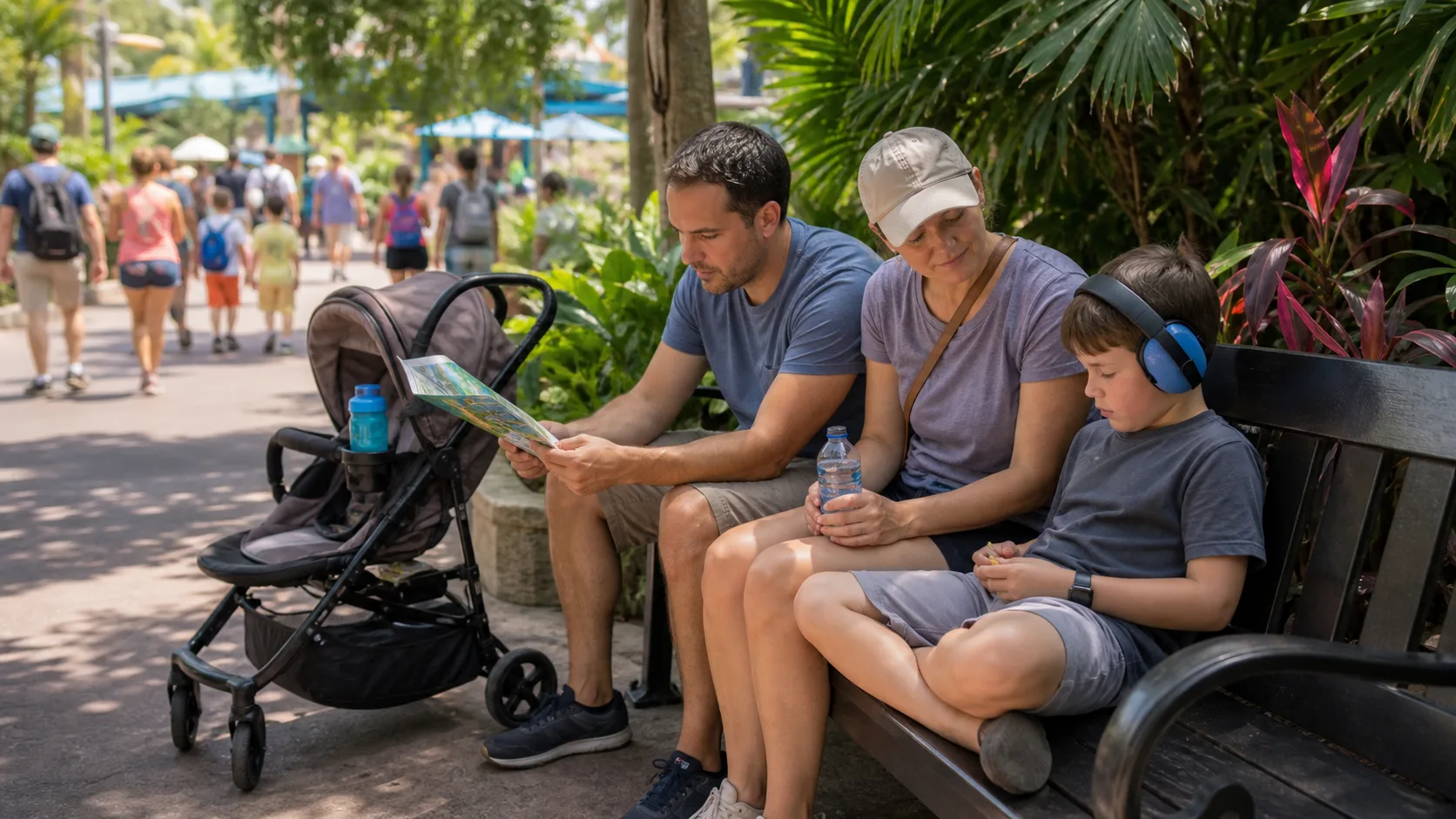
Quick answer
| Best overall | Choose fewer park days, shorter blocks, predictable meals, and a hotel or rental that makes recovery realistic. |
|---|---|
| Best low-stress choice | The lowest-stress plan usually has one major activity per day, a clear exit route, and no pressure to stay until closing. |
| Best for space | A suite, quiet room location, or rental can matter more than being closest to the busiest attractions. |
| Best without a car | Car-free trips can work, but only if shuttle timing, rideshares, and hotel location do not trap the family after overload starts. |
| Main caveat | This guide is practical planning support, not medical advice. Confirm official accessibility policies and use what already works for your child. |
Start with the stress points
A sensory-aware Orlando plan should start with the hard moments: arrival, security, heat, loud queues, hunger, transitions, bedtime, and the trip back to the room.
The goal is not to remove every challenge. The goal is to reduce avoidable pressure and make it easier to stop before the day becomes too much.
- Plan the first break before the first park day starts.
- Choose fewer must-do attractions and protect meal timing.
- Keep headphones, familiar snacks, and comfort items reachable.
- Decide what signs mean the family leaves, even if tickets were expensive.
Choose the hotel base carefully
For sensory-sensitive children, the room is part of the itinerary. It may be where the family eats, decompresses, changes clothes, splits up, or ends the day early.
Compare quiet hotels near Disney World and Orlando suite hotels for families if sleep, noise, or room separation will affect the whole trip.
| Hotel factor | Why it matters | What to ask |
|---|---|---|
| Room location | Hallway noise, elevators, pool music, and roads can affect recovery. | Can you request a quieter room location? |
| Layout | Some children need separation from siblings or adults after a busy day. | Is there a suite, door, balcony, or sitting area? |
| Transport | A long return can make overload harder to recover from. | How realistic is a midday break? |
| Food | Reliable food can prevent stress from building. | Is breakfast simple and are familiar foods nearby? |
Parks, breaks, and exits
Theme parks vary by noise, walking pressure, shade, show timing, queues, and exit flexibility. Compare parks by how your child handles those factors, not by which one is most famous.
Use best Orlando theme parks for sensory-sensitive kids and Disney World midday break strategy before buying tickets or locking in hotel locations.
Family fit matrix
| Family type | Fit | What to watch |
|---|---|---|
| Toddlers | Needs caution | Naps, food, heat, stroller breaks, and early exits matter. |
| Sensory-sensitive kids | Core audience | Plan noise, crowds, transitions, and room recovery before booking. |
| Grandparents | Helpful with planning | Extra adults can support split plans, but walking and heat still matter. |
| Large families | Mixed | One child's needs can split the group, so plan flexible roles. |
| No-car families | Check carefully | Shuttle uncertainty and rideshare waits can make exits harder. |
Planning checklist
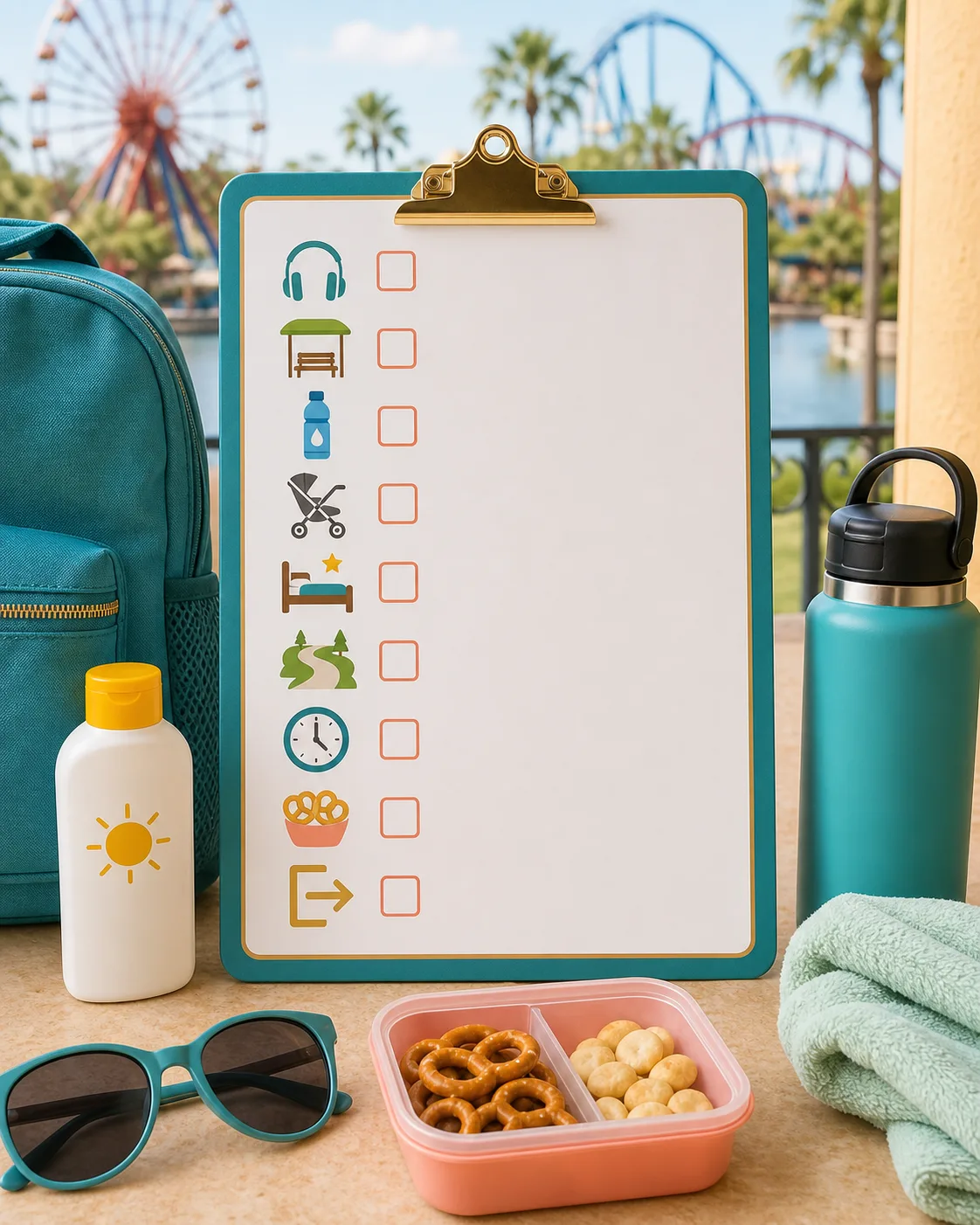
- Choose fewer park days than a high-energy itinerary would suggest.
- Book a hotel or rental that makes breaks realistic.
- Identify the first quiet break before entering the park.
- Pack headphones, familiar snacks, water, comfort items, and backup clothes.
- Keep official accessibility policy links handy.
- Plan one low-demand meal after each high-stimulation block.
- Make the exit plan clear to every adult before the day starts.
Official resources to check
- Walt Disney World guests with disabilities
- Universal Orlando accessibility information
- SeaWorld Orlando accessibility guide
FAQ
Is Orlando good for sensory-sensitive children?
It can be, but the trip needs a realistic plan for noise, heat, crowds, food, breaks, and recovery. Some families do better with fewer park days and a calmer hotel base.
Which Orlando park is best for sensory-sensitive kids?
There is no universal best park. Compare noise, queues, walking, shows, exits, and official accessibility policies against your child's specific stress points.
Should sensory-sensitive families stay close to the parks?
Often yes if midday breaks matter, but a quieter room layout can be more important than the shortest possible distance.
Is this medical advice?
No. FamJaunt sensory notes are editorial planning guidance, not medical, diagnostic, or therapeutic advice.
Related guides
- Sensory-friendly Orlando hub
- Best Orlando theme parks for sensory-sensitive kids
- Quiet hotels near Disney World
- Disney World midday break strategy
- Sensory-friendly family travel checklist
Bottom line
A sensory-aware Orlando trip is usually not about doing less forever. It is about doing less at once, protecting recovery time, and making it easy to stop.