
Quick answer
| Best overall | Plan for noise, crowds, food, sleep, transitions, breaks, and exits before the family is under pressure. |
|---|---|
| Best low-stress choice | The lowest-stress checklist is short, reachable, and based on supports your child already accepts. |
| Best for space | Choose hotels, rentals, and day plans that create real recovery space, not just a place to store luggage. |
| Best without a car | Car-free trips need extra planning for exits, groceries, familiar foods, and transport delays. |
| Main caveat | This checklist is practical planning guidance, not medical advice. Use official policies and your child's known supports. |
Before booking
The most important sensory-friendly decisions happen before the trip is booked. Hotel location, room layout, transport, park mix, and cancellation flexibility decide whether breaks are realistic.
If the plan depends on a child tolerating long waits, missed meals, late nights, and no private recovery space, the checklist is already overloaded.
| Decision | Why it matters | Lower-stress check |
|---|---|---|
| Hotel or rental | Controls sleep, recovery, meals, and breaks. | Can the family return easily before overload? |
| Park days | Too many high-pressure days stack stress. | Are rest days or half days protected? |
| Transport | Hard exits get harder when transport is uncertain. | Is there a clear way to leave early? |
| Food | Unfamiliar meals can add pressure. | Can familiar foods stay accessible? |
Day-bag checklist
Pack the day bag for known stress points, not for every possible scenario. The useful item is the one an adult can reach quickly when a transition starts getting hard.
For Orlando park days, combine this with Orlando family packing list and Orlando with a sensory-sensitive child.
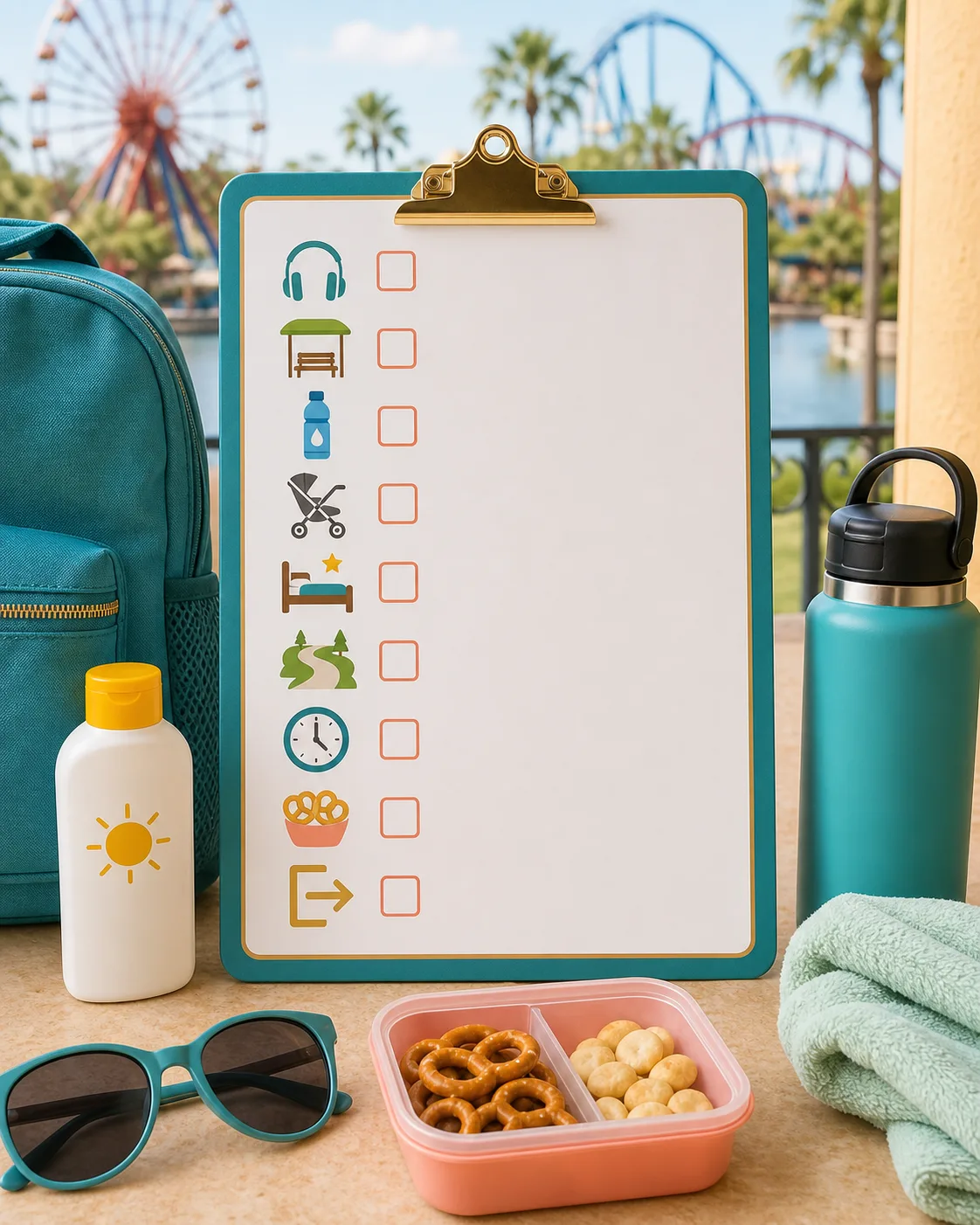
- Headphones or ear protection your child already accepts.
- Familiar snacks and water.
- Comfort item or small quiet activity.
- Backup clothing or texture-friendly layer.
- Portable charger and screenshots of plans or policies.
- Clear first-break and exit plan.
During the trip
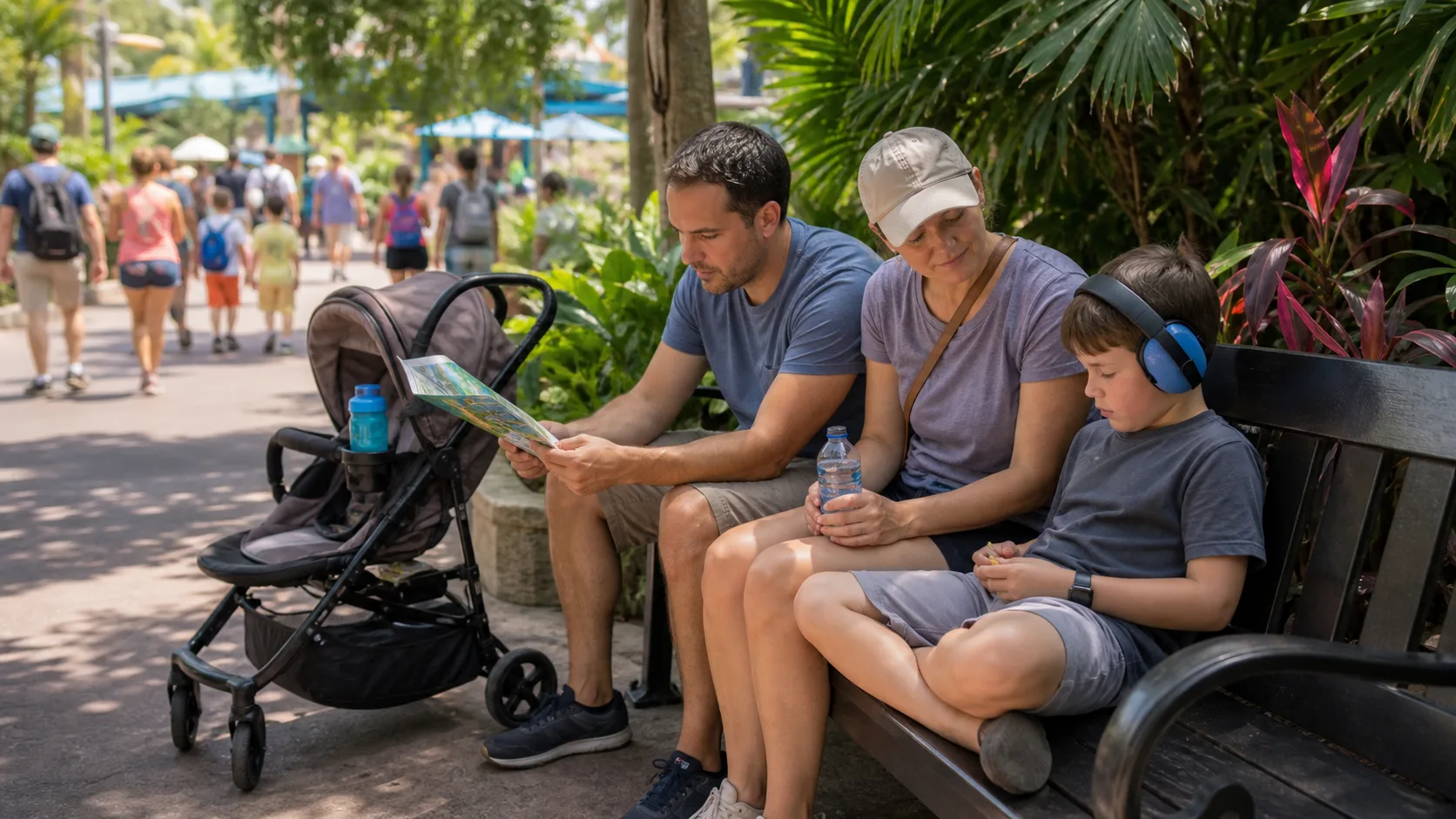
Use the checklist before pressure peaks. Many families wait until the child is already overwhelmed, then discover that the break location, food, or transport plan is too hard to use.
A good rule: take the first break while everyone still thinks they might not need one. That keeps the break optional instead of emergency-only.
Family fit matrix
| Family type | Fit | What to watch |
|---|---|---|
| Toddlers | Helpful | Use familiar snacks, stroller breaks, naps, and short blocks. |
| Sensory-sensitive kids | Core audience | Noise, crowds, food, sleep, and exits should be planned before travel. |
| Grandparents | Helpful | Adults need shared expectations for breaks and split plans. |
| Large families | Important | Assign roles so one child's break does not confuse the whole group. |
| No-car families | Important | Transport uncertainty makes backup planning more important. |
Planning checklist
- Choose lodging that supports real recovery time.
- Schedule fewer high-pressure days than the maximum possible.
- Identify quiet breaks before entering busy places.
- Pack accepted headphones, familiar snacks, water, and a comfort item.
- Keep screenshots of official accessibility policies and reservations.
- Plan meals before hunger becomes a problem.
- Agree on exit signs and adult roles before the day starts.
- Leave early when the plan is still recoverable.
Official resources to check
- Walt Disney World guests with disabilities
- Universal Orlando accessibility information
- SeaWorld Orlando accessibility guide
FAQ
What should be in a sensory-friendly travel checklist?
Include noise supports, familiar snacks, water, comfort items, break locations, transport exits, sleep needs, food plans, and official accessibility information.
Is a sensory-friendly checklist medical advice?
No. This is practical family travel planning guidance, not medical, diagnostic, or therapeutic advice.
How can families reduce sensory overload while traveling?
Reduce the number of must-do activities, plan breaks early, keep food predictable, protect sleep, and choose lodging that makes recovery realistic.
Should families request accessibility accommodations before travel?
If accommodations may be needed, review official policies before booking and confirm current requirements directly with the provider.
Related guides
- Resources hub
- Sensory-friendly Orlando hub
- Orlando with a sensory-sensitive child
- Best Orlando theme parks for sensory-sensitive kids
- Quiet hotels near Disney World
Bottom line
A sensory-friendly checklist works best when it changes the actual plan: fewer pressure points, earlier breaks, predictable food, and a lodging base that supports recovery.