
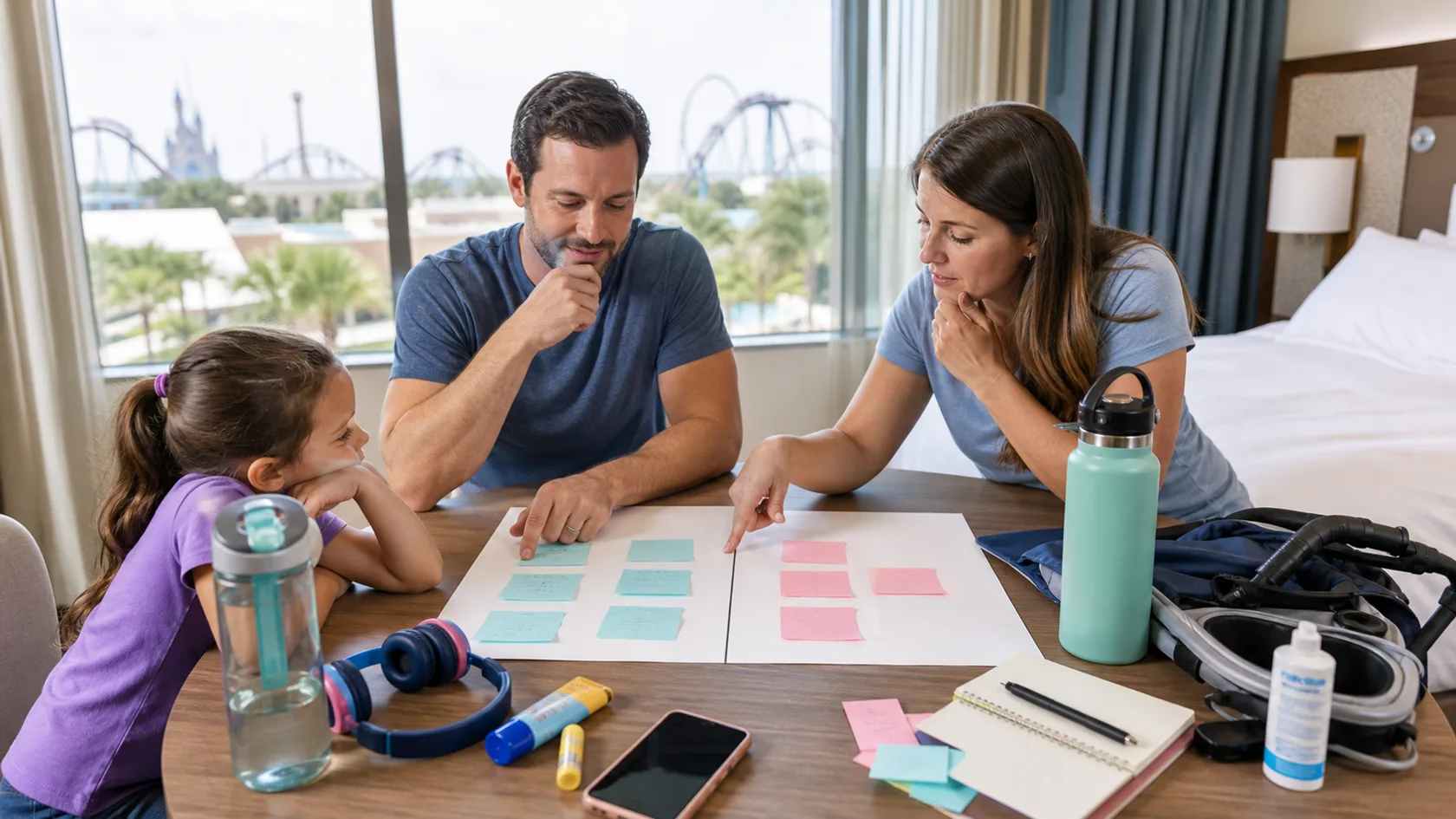
Quick answer
| Best overall | Disney World is usually easier for families with younger children and classic character interests; Universal often fits older kids who actively want thrill rides and immersive worlds. |
|---|---|
| Best low-stress choice | Choose the park system with fewer must-dos and a clearer break plan, not the one with the longest attraction list. |
| Best for space | A nearby suite hotel or vacation rental matters more when your family needs separate sleep space between intense park days. |
| Best without a car | Car-free families should compare official hotel transport, rideshare pickup points, and how hard it is to leave midday. |
| Main caveat | A child who strongly loves one theme can tolerate more friction, but interest does not erase heat, crowds, queues, or walking. |
Best fit by family type
Use age, interests, ride tolerance, walking stamina, and break needs as the first filter. A park system that looks better on a top-ten list may still be wrong for your trip if it creates too many hard transitions.
If your child is sensory-sensitive, compare this guide with best Orlando theme parks for sensory-sensitive kids before buying tickets.
| Family priority | Often easier starting point | What to verify |
|---|---|---|
| Toddlers and preschoolers | Disney World | Naps, stroller logistics, character interest, and midday breaks. |
| Thrill-seeking older kids | Universal Orlando | Height requirements, dark queues, motion rides, and ride intensity. |
| Sensory-sensitive child | Depends on triggers | Noise, crowds, exits, indoor effects, and hotel recovery. |
| Grandparents in group | Lower-walking day design | Shade, seating, transport, and split plans. |
Planning complexity
Disney World can involve more pre-planning because families often compare multiple parks, dining, transportation, resort choices, and long wish lists. Universal can feel simpler for some families, but ride intensity and queue environments still require careful screening.
The lower-stress choice is often the one where your family can happily skip more things. If every attraction feels essential, the day becomes harder.
- Pick one or two must-do experiences before comparing tickets.
- Check height requirements and ride warnings before promising anything to kids.
- Decide whether midday breaks are realistic from your hotel.
- Plan a split option if siblings have very different interests.
Where to stay for a Disney or Universal trip
If you are spending most days in one park system, staying nearby can reduce transport friction. If your trip mixes Disney, Universal, SeaWorld, and rest days, a broader Orlando hotel or rental search may make more sense.
Start with quiet hotel planning near Disney World when sleep and recovery matter, or compare hotels vs vacation rentals in Orlando if space is the main pressure point.
Sensory and low-stress notes
Disney and Universal can both be overwhelming. The difficult parts may be different: crowd density, sound effects, dark queues, fireworks, parades, transportation, immersive indoor spaces, or long exits.
FamJaunt sensory notes are editorial planning guidance, not medical advice or official accessibility certification. Review official accessibility resources before buying tickets.
Family fit matrix
| Family type | Fit | What to watch |
|---|---|---|
| Toddlers | Disney often easier | Naps, stroller pressure, heat, fireworks, and long returns. |
| Sensory-sensitive kids | Mixed | Dark queues, sound effects, crowds, exits, and hotel recovery. |
| Grandparents | Mixed | Walking distance, shade, seating, transport, and split plans. |
| Large families | Mixed | Different ride interests, ticket cost, hotel rooms, and meeting points. |
| No-car families | Mixed | Hotel transport, rideshare pickup, final returns, and midday break realism. |
Planning checklist
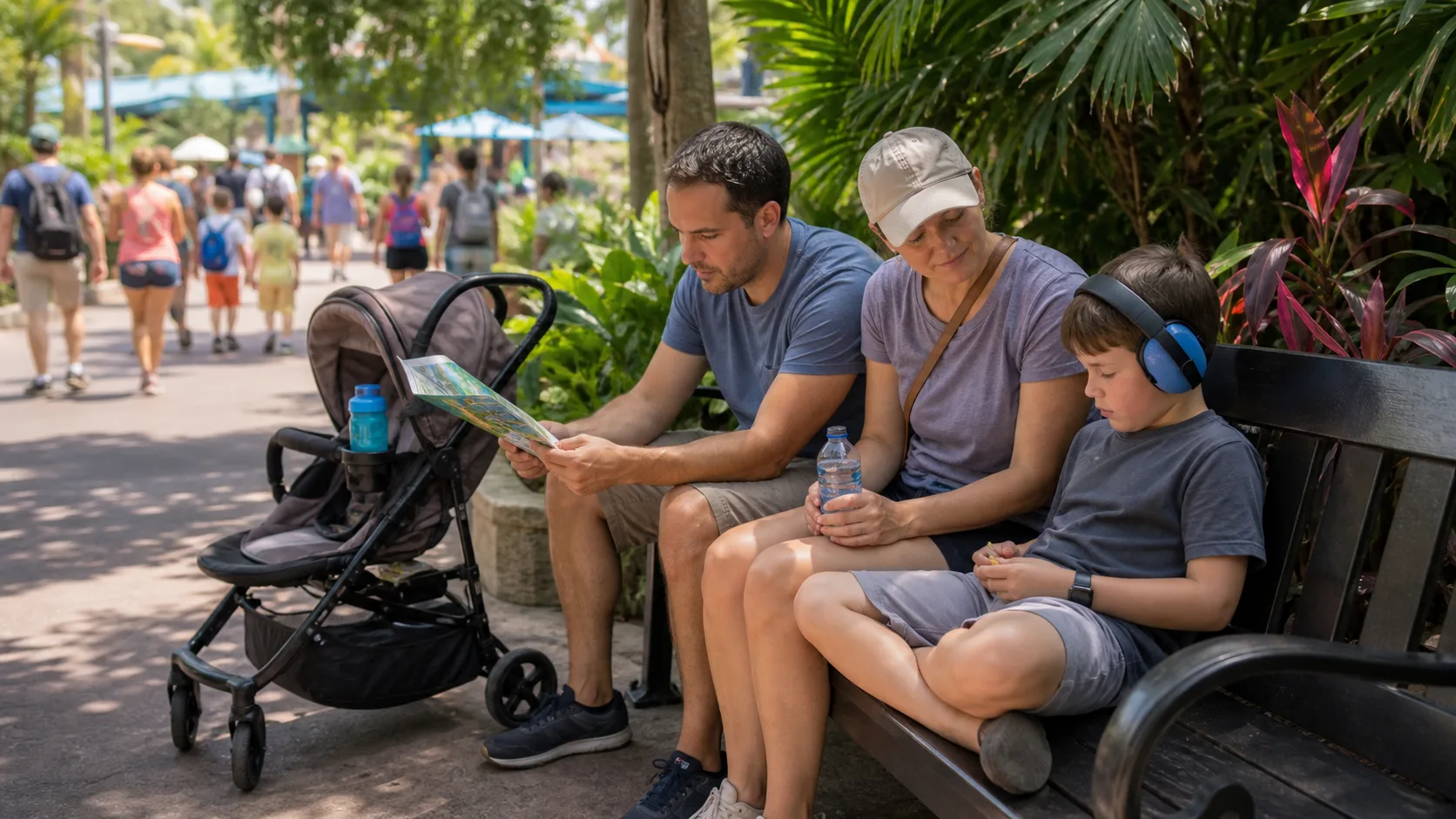
- List your top two park goals before comparing multi-day tickets.
- Check current official accessibility and ride requirement information.
- Compare walking, transport, and midday exit options from your hotel.
- Plan what younger kids or grandparents will do during thrill rides.
- Build a rest day after the highest-pressure park day.
- Choose nearby lodging if breaks and early exits are central to the plan.
- Avoid promising fireworks, late nights, or every major attraction before seeing the first day pace.
Official resources to check
- Walt Disney World accessibility services
- Universal Orlando accessibility information
- Walt Disney World transportation information
FAQ
Is Disney World or Universal Orlando better for families?
Disney World is often easier for younger children and families who want classic character-driven experiences. Universal can be better for older kids and teens who actively want thrill rides and immersive worlds. The better choice depends on age, interests, sensory tolerance, walking stamina, and budget.
Is Universal Orlando good for toddlers?
Universal can work for some toddler families, but it is usually more limited than Disney World for very young children. Check height requirements, stroller logistics, shows, play areas, and whether older siblings will drive the plan.
Which is easier for sensory-sensitive kids?
Neither is automatically easier for every sensory-sensitive child. Universal may have more intense queues and ride effects for some kids, while Disney can involve heavier crowds, fireworks, parades, and transportation complexity. Compare the specific triggers your child struggles with.
Should families do both Disney and Universal in one Orlando trip?
Some families can, especially on longer trips with rest days. Short trips with toddlers, grandparents, or sensory-sensitive kids may be easier if you choose fewer park systems and protect recovery time.
Related guides
- Theme parks with kids hub
- Disney World vs SeaWorld for families
- Best Orlando theme parks for sensory-sensitive kids
- Disney World midday break strategy with kids
- Orlando family packing list
Bottom line
Choose the park system your family can pace well, leave when needed, and recover from. The best Orlando park plan is the one that protects the next day too.